
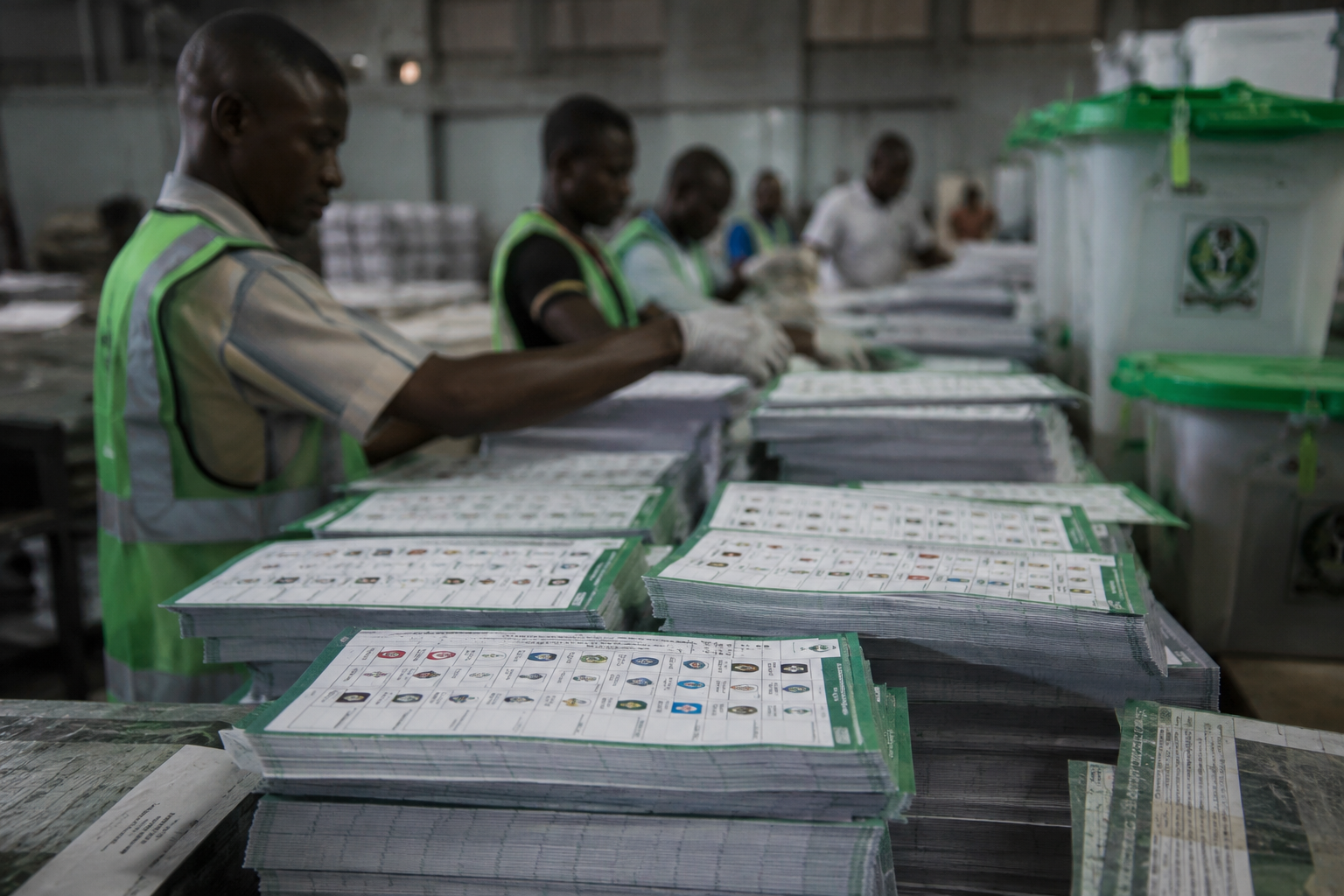
Concerns are emerging over the transparency of ballot printing contracts ahead of Nigeria’s 2027 general elections following the circulation of an investigative publication online.
The report, titled “The Bloody Ballot: Political Cartel,” reportedly raised allegations suggesting possible political influence in the awarding of sensitive election printing contracts.
While the claims have not been independently verified or confirmed by any legal or regulatory authority, the publication has fueled wider public discussion on electoral accountability and trust.
According to the report, attention is now being drawn to who controls the production of Nigeria’s ballot papers as the country continues transitioning toward local printing of electoral materials.
Supporters of local production reportedly argue that it strengthens Nigerian businesses, reduces foreign exchange pressure, enhances technical capacity, and lowers logistics costs associated with foreign printing.
However, critics warn that without strict safeguards, local production could increase the risk of political interference in the electoral process.
The publication further alleged that some politically connected firms may already be positioned to secure election printing contracts ahead of the 2027 polls.
Among the issues reportedly raised are concerns about transparency in procurement procedures, questions over contractor affiliations, and doubts about experience in secure electoral printing.
The report also called for stronger oversight mechanisms involving journalists, civil society organisations, and regulatory agencies to ensure accountability.
It emphasized that all allegations remain unverified unless confirmed by competent legal or regulatory authorities.
Observers reportedly noted that public trust in elections depends on transparency not only during voting, but also in the systems behind procurement, printing, storage, and distribution of election materials.
As preparations for the 2027 elections progress, attention is expected to remain focused on both political activities and the integrity of electoral processes.
Source: Nairaland